Grasshopper Tutorial - 2D attractor points
A simple geometric pattern consisting of a grid of circles with radii defined by the distance to a point on the plane, the data from the point must be filtered to keep the circles within reasonable minimum and maximum dimensions, this is achieved through the MIN function and the area of influences are limited by a ranged slider controlling the algorithm.
This is a very simple 2D arrangement that represents diminishing forces, when applied to 3 dimensions it rapidly lost the usefulness of patterns but did generate some interesting forms. Working with a single point-distance is not sufficient for this attractor system and 2D shapes is not capable of generating surfaces without normal manipulation, which will require some vector algorithms.
 |
| Almost like a Lorenz attractor but with less Armageddon |
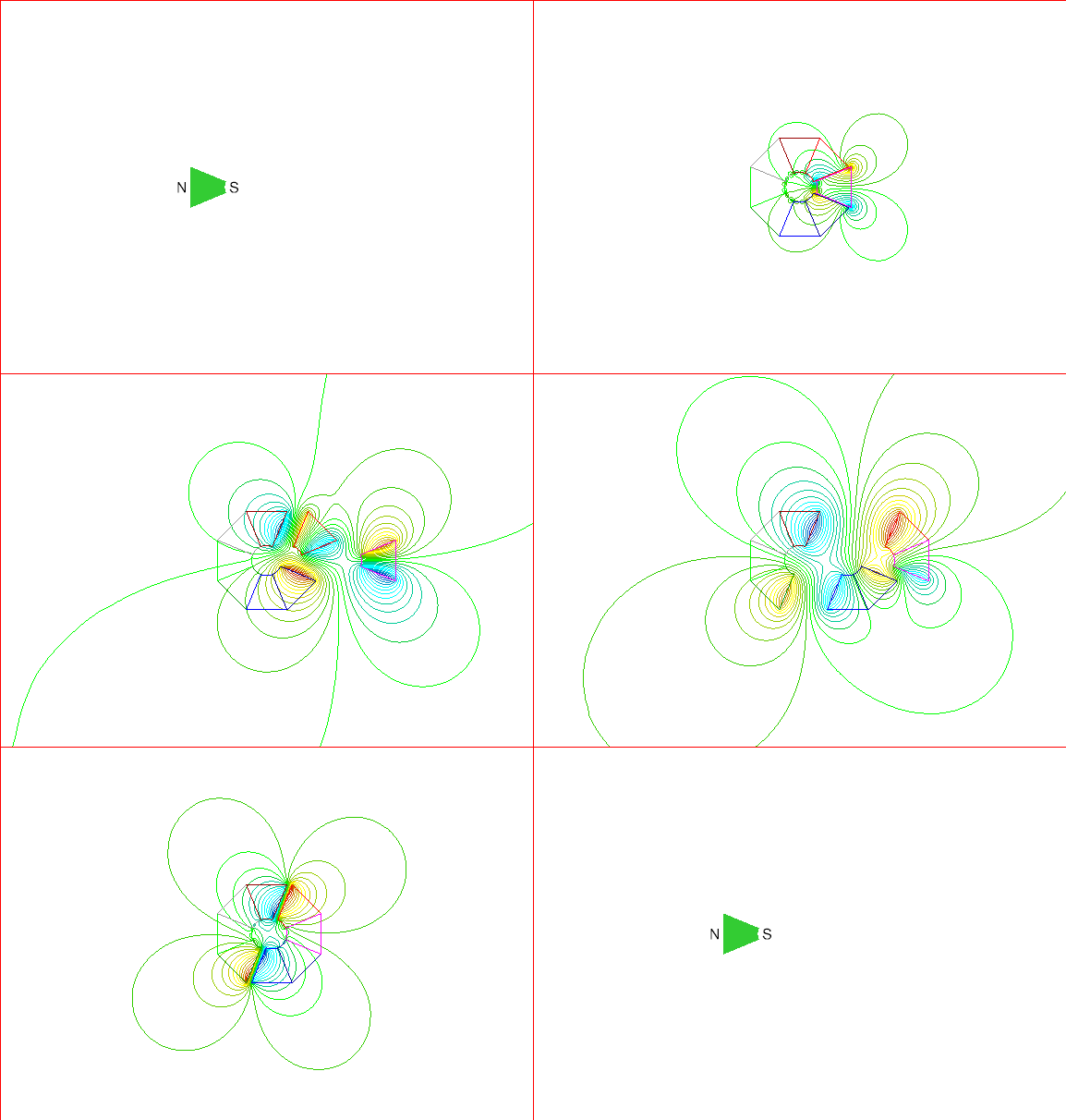
A brief demonstration of the magnetic properties of field lines, explaining that each point in space is a vector for alignment within the magnetic field, shown here by iron filings in a suspension. This is a very basic transparent high-density particle suspension system than a ferro fluid, it has similar magnetic properties to proper ferrofluid and demonstrates the patterns formed at the poles of a bar magnet. The point of interest is how it is formed over time from the floating filings in accordance to the fields pattern, giving rise to the possibility of an assembly concept.
An architectural precedent for structures based of magnetic field relations, showing how the forms can be translated into spaces and an interrelation between points can map out more than simple patterns. The project linked below actually used grasshopper as part of the generative design component, including some of the iterative processes which have provided some useful reference points for similar undertakings.